If you have typed “chore chart printable” or “age appropriate chores” into a search bar at 9 p.m., you are in good company. Whether you searched “chore chart by age” or just need a starting list, most of us want kids who help—not because the house needs another drill sergeant, but because belonging feels better when everyone contributes.
This guide walks through chores by age for kids 2–12, using the same gentle job lists that live in the Making the Day Count printable bundles. You will find clear lists, a simple answer to “how many?,” a calm take on allowance, and a weekly rhythm that keeps a chore chart for kids from becoming another forgotten paper on the fridge.
You do not need a complicated points app or a laminated command center to begin. A single printable page, hung where little eyes can see it, is enough to start teaching “we take care of our home together.” The rest is consistency, a warm tone, and the humility to shorten the list when life gets loud.
Why chores matter: belonging, not perfection
Chores are not about raising tiny employees. They are about showing children, early and kindly, that this home is theirs too. When a toddler puts books on the shelf, they are practicing “I help here.” When a tween packs their own lunch, they are practicing “I can handle my day.”
Perfection is the wrong target. Trying is the right one. A half-made bed still counts. A spill wiped with a smudge still counts. Praise the effort out loud, keep the list short enough to succeed, and let the chart be a quiet reminder instead of a scoreboard that shames anyone.
It also helps to separate “helping” from “doing it my way.” If you redo every job behind them, kids learn that their work does not matter. If you coach once, then accept a good-enough result, they learn that contribution is real. That soft shift—from correcting to coaching—is often what makes a chore chart feel peaceful instead of tense.
A simple family rule: we all help our home. The jobs change with age. The belonging stays the same.
Age-appropriate chores for ages 2–4
Toddlers thrive with jobs they can see and finish quickly. Pictures work better than long words. Color-in circles or stickers feel more rewarding than tiny checkboxes. Keep adult help nearby, and treat every attempt as practice.
At this age, the “chore” is often a two-minute invitation: “Let’s put the blocks in the bin together.” Independence grows from side-by-side help, not from expecting a preschooler to manage a full checklist alone. Hang the chart low—fridge bottom, pantry door, or a wall they can touch—so pointing at the next picture becomes part of the game.
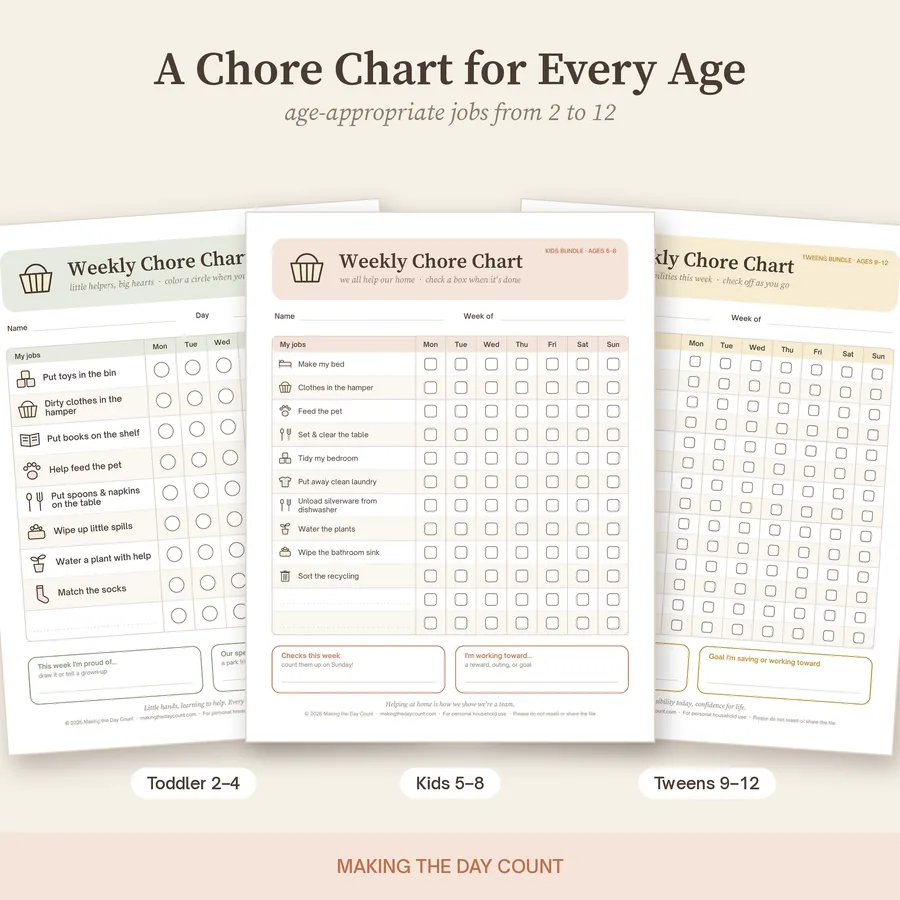
Toddler chore ideas (from the Toddler Bundle)
- Put toys in the bin
- Dirty clothes in the hamper
- Put books on the shelf
- Help feed the pet
- Put spoons & napkins on the table
- Wipe up little spills
- Water a plant with help
- Match the socks
Pair chores with a picture morning and bedtime routine so the day has a clear “what comes next.” That visual schedule energy—point, then do—is often the difference between constant reminding and a calmer rhythm.
Common hiccup: “They won’t follow it.” Usually that means the chart is too high, the jobs are too vague, or we skipped the teaching step. Show the picture, do the job once with them, then invite them to try. Celebrate the try before you ask for a cleaner wipe or neater pile.
Age-appropriate chores for ages 5–8
School-age kids are ready for jobs with a beginning, middle and end. Icons plus simple words help new readers. Mon–Sun checkboxes on one sheet make a weekly printable chore chart feel doable instead of overwhelming.
This is also the sweet spot for teaching “finish the job.” Making the bed includes pulling the blanket up. Setting the table includes napkins. Sorting recycling includes walking the bin back. Gentle specificity now prevents a decade of half-done tasks later—and it still stays kind when you model the last step beside them a few times.
Kids chore ideas (from the Kids Bundle)
- Make my bed
- Clothes in the hamper
- Feed the pet
- Set & clear the table
- Tidy my bedroom
- Put away clean laundry
- Unload silverware from the dishwasher
- Water the plants
- Wipe the bathroom sink
- Sort the recycling
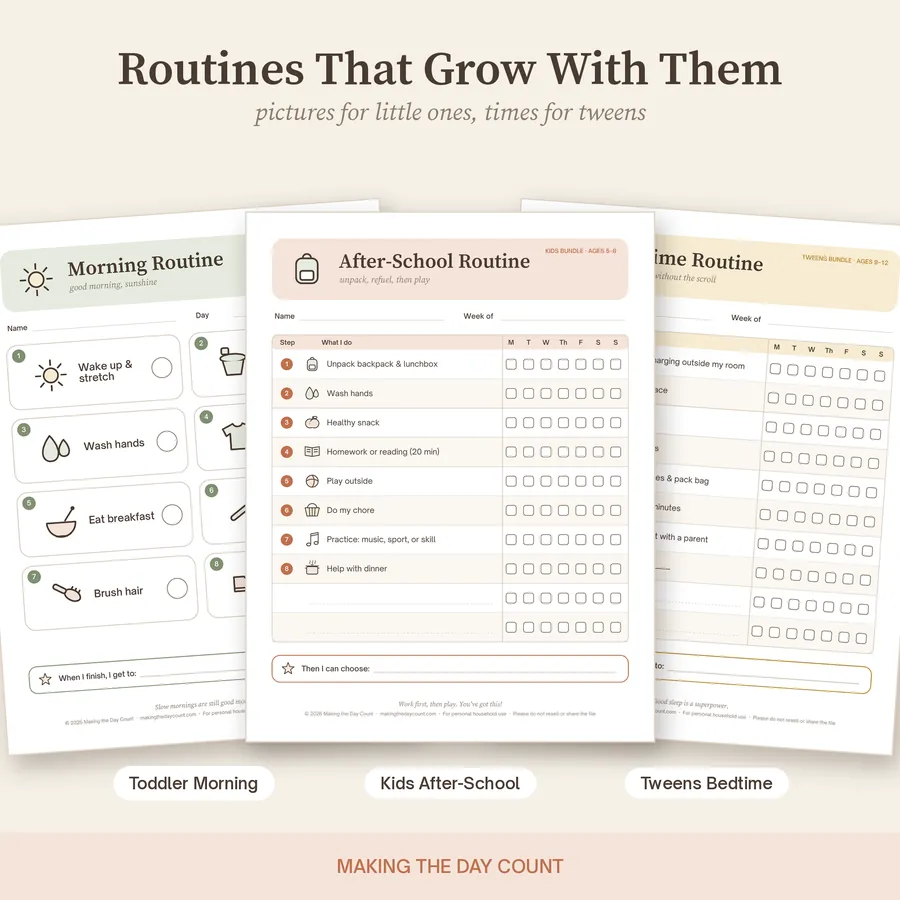
After school, keep the order gentle but firm: unpack, snack, a short stretch of homework or reading, then play and one chore. Work-then-play is easier to teach at seven than at twelve. A predictable after-school strip on the chart reduces the crash that happens when kids walk in hungry, overstimulated, and unsure what is expected.
Blank lines on the chart matter here. Every home has its own extras—water the garden, feed the chickens, wipe baseboards after art time. Write those in by hand so the printable feels like your family, not a generic template.
Age-appropriate chores for ages 9–12
Tweens are ready for real-life skills: laundry, dishes, trash, a simple meal, yard work. Timed routines they can run themselves build independence. An optional points or allowance box on the chart keeps money conversations clear without turning every sock into a negotiation.
At this age, screens often compete with responsibility. A simple after-school rule works well for many families: homework and chores first, then screen time. Writing that order on a routine page removes the daily debate. Devices charging outside the bedroom at night is another gentle boundary that protects sleep without a long lecture.
Tween chore ideas (from the Tweens Bundle)
- Make bed & tidy room
- Wash, fold & put away my laundry
- Empty the dishwasher
- Load dishes after dinner
- Take out trash & recycling
- Vacuum or sweep one room
- Clean bathroom sink & mirror
- Wipe kitchen counters
- Care for the pet (food, water, walk)
- Pack my own lunch
- Help cook one family meal
- Yard work / shovel snow
Sit down together when you choose the list. Ownership builds buy-in. Fill in morning and after-school times so they can move through the day without waiting for a reminder from you.
Rotate bigger jobs monthly if motivation dips: one month they own trash and recycling, the next they own bathroom sinks and counters. Rotation keeps skills growing and keeps the chart from feeling like a life sentence.
How many chores per age?
Less is more at the start. A short list done most days beats a long list abandoned by Wednesday. Think in layers: a few daily non-negotiables, plus one or two weekly stretch jobs.
- Ages 2–4: 2–4 jobs. Favor the ones they already like (toys, pets, matching). Expect help beside them.
- Ages 5–8: 4–6 daily or near-daily chores. Leave blank lines for family-specific jobs. Aim for success four or five days a week before adding more.
- Ages 9–12: 5–8 responsibilities, mixing daily basics with 1–2 bigger weekly jobs (laundry day, cook one meal). Let them propose swaps.
If Sundays feel heavy, count checks together and ask: “What felt easy? What should we swap?” Adjusting the chart is not failure—it is teaching. Seasonal shifts count too: outdoor watering in summer, shoveling or boot tidy in winter, backpack reset when school is in full swing.
Siblings of different ages should not share identical lists. Matching chart design is lovely; matching expectations is not. A toddler’s “put toys in the bin” and a tween’s “vacuum one room” can live on the same fridge and still feel fair.
Paying an allowance or not
There is no single right answer. Two calm options work well in real homes:
- Belonging first. Basic chores are part of being in the family. Allowance (if you use one) is separate and tied to age, not every wiped counter.
- Clear trade. A small amount or point value per completed job, tracked on the chart, with a savings goal written at the bottom.
A third middle path some families like: household basics are unpaid (room tidy, dishes help, laundry), while optional “extra credit” jobs earn money—washing the car, deep-cleaning a closet, babysitting a younger sibling for a short window. That keeps belonging intact while still teaching earned income.
What matters most is clarity. Kids feel safer when they know the rule. Pick one approach, write it simply, and revisit it every few months as kids grow. Avoid changing the deal mid-week in frustration; save changes for the Sunday reset. The Tweens Bundle includes optional points/allowance and goal boxes if you want that structure printed for you.
Making it stick with a weekly chore chart
A pretty printable only helps if it lives where life happens. Try this gentle weekly loop:
- Sunday reset (5 minutes). Choose or confirm the week’s chores. Write any extras on the blank lines. Let kids suggest one job they want to “own.”
- Hang it low. Fridge, pantry door, or a clipboard at kid eye level. If they cannot see it, they will not use it.
- Reuse the page. Slip the sheet into a protector and use a dry-erase marker so one print lasts for months. Light-ink charts are kinder to home printers too.
- Praise the trying. Notice effort out loud. Save bigger celebrations for consistency, not perfection. A park trip, extra story, or choice of dinner music can be enough.
- Connect chores to routines. Morning, after-school and bedtime checklists reduce the “remind me again?” loop that drains everyone.
- Expect dips. Sick weeks, travel, and busy sports seasons happen. Shrink the list temporarily instead of abandoning the whole idea.
When someone digs in their heels, return to connection before correction: a snack, a hug, a clear choice between two acceptable jobs. Charts support relationship; they do not replace it.
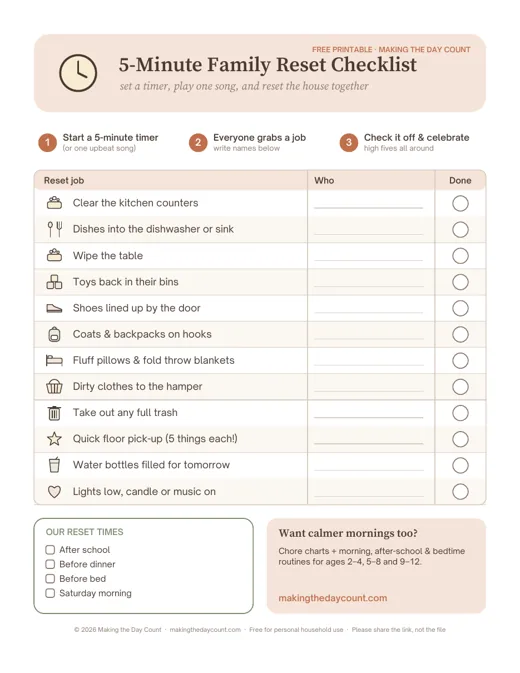
Need a tiny win today? The free 5-Minute Family Reset Checklist is a one-song tidy that gets the whole crew moving together—no perfect system required.
Printable chore chart options
If you want charts that already match these age lists—plus morning, after-school, bedtime and family rhythm pages—here are the Making the Day Count bundles. Each is a US Letter PDF, light-ink and ready to print at home.
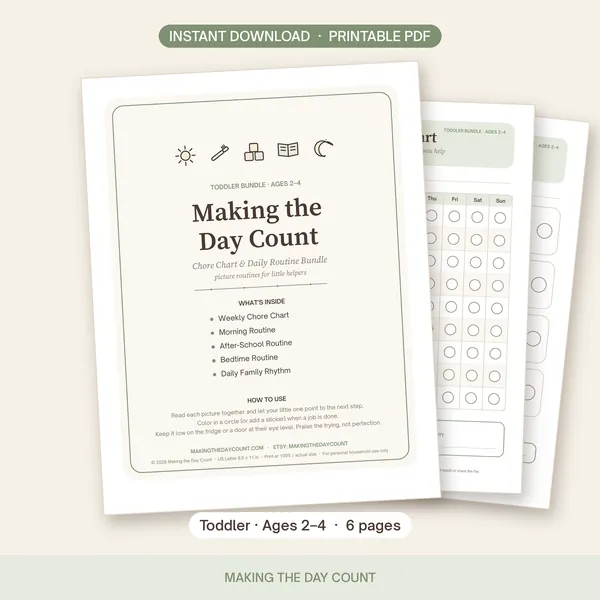
Toddler Bundle (Ages 2–4)
Big picture cards, color-in circles, and toddler-sized jobs.
View on Etsy · $6.50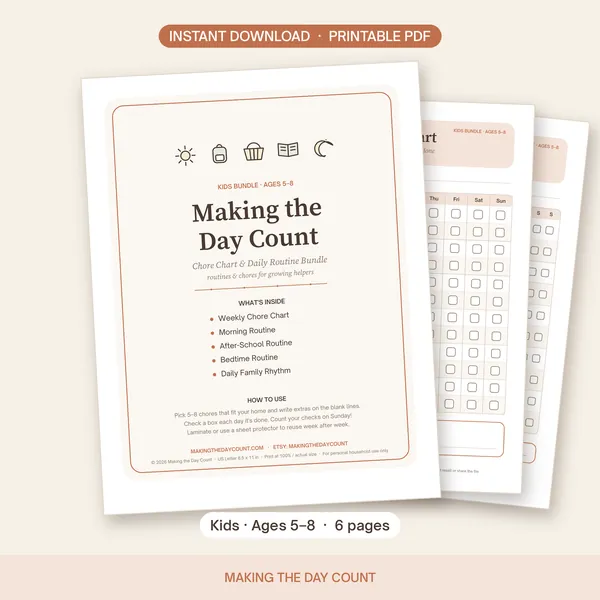
Kids Bundle (Ages 5–8)
Icons, simple words, and 10 age-appropriate chores with Mon–Sun boxes.
View on Etsy · $6.50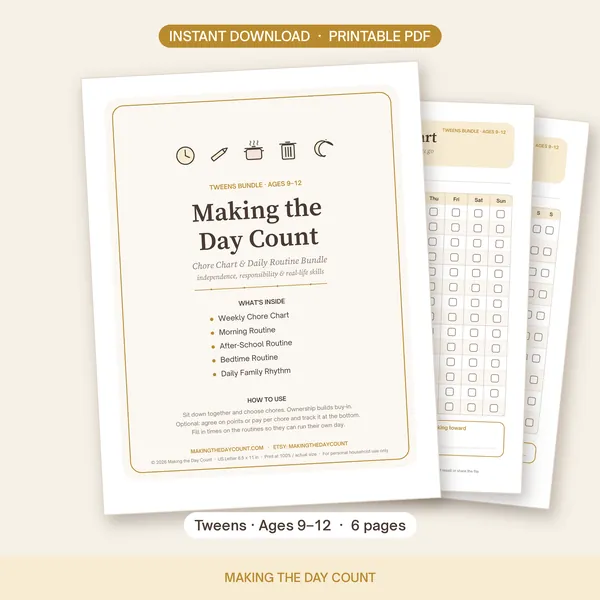
Tweens Bundle (Ages 9–12)
Real-life skills, timed routines, and optional allowance/points tracking.
View on Etsy · $6.50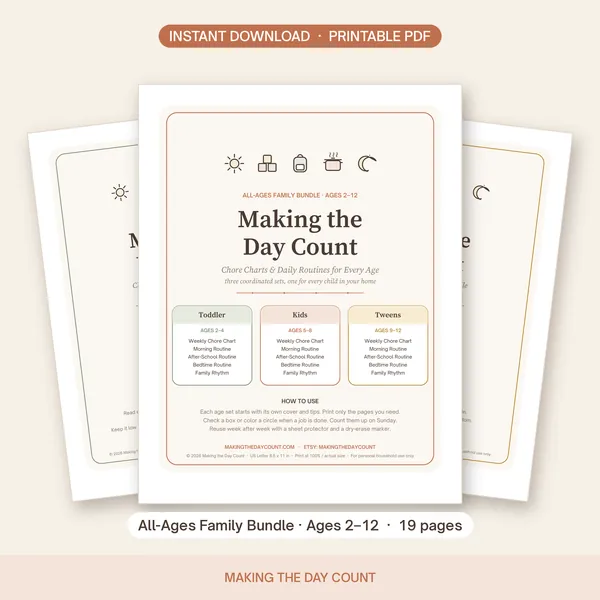
All-Ages Family Bundle
All three age sets (19 pages) so siblings match without sharing the same jobs.
View on Etsy · $14Prefer to start free? Join the list on the homepage free printable section for the 5-Minute Family Reset Checklist—a gentle way to practice “we all help” before you commit to a full weekly chart.
A closing note
Age-appropriate chores are less about a perfect system and more about a steady invitation: you belong here, and your help matters. Start small, keep the tone warm, and let the printable chore chart be a quiet friend on the fridge—not another thing to get right.
If all you do this week is pick three jobs for one child and hang a page where they can reach it, that is enough. Calmer days grow from small, repeated kindnesses—toward your kids, and toward yourself.